
So… You Think You’re Holy?
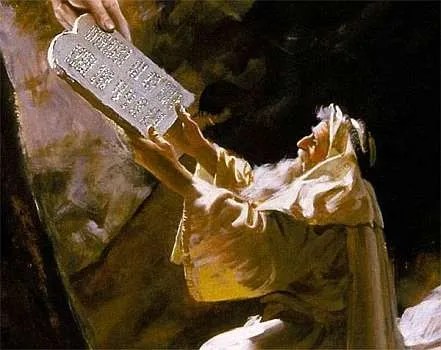 So…you think you’re holy?
If you’re in Christ, you are, but we’ll get back to that at the end.
I have received a lot of criticism for my “antinomianism” from people who believe that they have come to a point in their sanctification where they no longer break the moral law and in those rare instances when they do, they quickly repent and stay in a state of grace.
They expect you and I to go and do likewise…or question our salvation if we don’t.
I counter that all my sins have been forgiven, I’m always in a state of grace, and I have no worries about my salvation because of behavior.
I’m trusting in His work and righteousness and not my own.
For those dear saints who think they are “mostly” keeping the law…think again.
Let’s look at the law and check again at well we measure up.
The ten commandments are a bit broader than commonly taught.
For every “do not” there is an implied “do”.
For every “do” there is an implied “do not”.
To fully keep the law one must recognize and perform both.
To illustrate, here’s an example from the Heidelberg Catechism on the sixth commandment.
|
What does God require in the sixth commandment? That neither in thoughts, nor words, nor gestures, much less in deeds, I dishonour, hate, wound, or kill my neighbour, by myself or by another: (Matt.5:21,22; Matt.26:52; Gen.9:6) but that I lay aside all desire of revenge: (Eph.4:26; Rom.12:19; Matt.5:25; Matt.18:35) also, that I hurt not myself, nor wilfully expose myself to any danger. (Rom.13:14; Col.2:23; Matt.4:7) Wherefore also the magistrate is armed with the sword, to prevent murder. (Gen.9:6; Exod.21:14; Matt.26:52; Rom.13:4) But this commandment seems only to speak of murder? In forbidding murder, God teaches us, that he abhors the causes thereof, such as envy, (Prov.14:30; Rom.1:29) hatred, (1 John 2:9,11) anger, (James 1:20; Gal.5:19,21) and desire of revenge; and that he accounts all these as murder. (1 John 3:15) But is it enough that we do not kill any man in the manner mentioned above? No: for when God forbids envy, hatred, and anger, he commands us to love our neighbour as ourselves; (Matt.7:12; Matt.22:39; Rom.12:10) to show patience, peace, meekness, mercy, and all kindness, towards him, (Eph.4:2; Gal.6:1,2; Matt.5:5,7,9; Rom.12:18; Luke 6:36; 1 Pet.3:8; Col.3:12; Rom.12:10,15) and prevent his hurt as much as in us lies; (Exod.23:5) and that we do good, even to our enemies. (Matt.5:44,45; Rom.12:20,21) |
Thus, both sides of the commandment are exegeted and must be obeyed…perfectly.
All ten have two sides…and if you break any part of any of the ten, Scripture says you broke all ten in entirety.
The point is this…we all sin, and we all sin all the time.
While some sins are more grievous than others, any sin not covered in the blood of Christ will damn you.
The more sanctified we become, the more aware we become of the depths of our sin and depravity, not impressed by how good we’re getting.
Thank God for Jesus and for grace.
We are saved by grace through faith and not by works (behavior).
We are kept the very same way.
You are holy and you are righteous…because you have been credited with the perfect life and atoning death of the One you have put your faith in.
Your behavior will only get you damned.
His works saved you and will keep you.
It’s not about you, it’s about Him.
That…is very good news.


This debate is raging all over … lots of sanctified believers are fighting
“lots of sanctified believers are fighting”
Thus, breaking the sixth commandment in the process… 🙂
Ya, I kinda agree with the angle you laid out with this one…probably the one of the areas I still see the facts of humanity and the human condition agreeing with part of the Calvinist Belief System.
None are holy. Every sins all the time.
I’m not so sure about Total Depravity…but certainly Partial Depravity.
Humans are a mix of good and bad…and even Post-Salvation…humans generally exchange a few Taboo sins for some other more acceptable sins…but they still keep right on uh sinin’ …and sometimes they sin just as much or worse…they just hide it and deny it.
The other fact I’ve observed is that you don’t “need Jesus” to live a more morally acceptable life…people have similar Testimonies as former Druggies who reform themselves through medical programs, 12 step programs, AA or other self-help programs. Mormons/LDS have many similar Testimonies, so do many who have converted to Judaism or Buddhism or even Islam in some cases.
The facts that are observable outside the evangelical Christian bubble demonstrate the same exact life turnarounds (in general) as any evangelical experience…and even with the evangelical experience, many Christians sin just as much or go from Druggies to Liars or Gluttons or Greedy or Divorced or some other ongoing sin that is more evangelically acceptable.
I also fully believe that the evangelical Christian experience does help a lot of folks and that many folks are generally good people (in general) who are Christians. I believe that Christianity is a Good influence in the World and does a lot of Good. I would put Christianity up against any of the other Philosophical Belief Systems and it demonstrates as much or more Good than any other Group…while also exhibiting the bad seen in many Groups as well.
All Humans and all Human Groups are capable of Good or Evil. All Humans and Human Groups sin regularly. Those are the facts of Humanity.
“This debate is raging all over ”
This is probably the easiest, most quantifiable, most observable and most supported fact about Humanity and Christians.
It’s like debating whether Gravity exists or not.
The Bible teaches that there is ‘practical” holiness and “positional” holiness.
“Positionally”, a born again believer is “in Christ” and the merits of Christ are imputed or “credited” to them by faith.
“Practically”, we are still saved sinners who walk in both the Spirit and the flesh and we will not “practically” be who who are “positionally” until we receive our eternal bodies and our redemption is completed.
Michael, agreed and I understand that doctrine.
Humans…even non-Christians…demonstrate practical holiness at times in their lives (to varying degrees)…and it is assumed that only “true Christians” have Positional Holiness imposed onto them via Jesus’s Atonement on the Cross.
All Humans, Christian and Non demonstrate regular sinning and regular practical holiness (in general and to varying degrees). None demonstrate only sinning with no practical holiness or no sinning with all practical holiness.
Already, but not yet…..
It’s an old discussion about an evident reality of our faith. Call it positionally, and practically….we are already saved and still in need of salvation. Already righteous, and still crooked and need to be made straight–another mystery–Another reason to throw up my hands and trust Him with everything I’ve got.
Mystery is what I see: mercy is what we need.
Mercy! Is what I pray…for myself and for my family of faith.
I will leave the deeper topics for you gents to sort out 🙂
Night PP family!
Personally, I think many assume only “true Christians” demonstrate the fruits of the spirit and holiness…when you can observe the Good Samaritan in daily life…atheists, folks from other faiths like Judaism etc who often times demonstrate “loving their neighbor” and doing things that please the Lord w/o believing they are doing it out of some quid pro quo to God.
In fact, some of my Mormon/LDS buddies and some of my Jewish buddies live much holier lives than most evangelical Christians I observe (including myself)…though they still sin at times, too.
If some metric of Personal Holiness is the “fruit” and the goal and the yardstick unto true Salvation…then there are a lot of Good Humanists and Good Mormons and Good Jews and Good Buddhists etc who will beat many Evangelical Christians in that race.
If Sinning is the big disqualifier of the race…then many bible characters are toast and most of today’s Evangelicals and their pastors are as well…as most will die in the sin of Gluttony or the sin of Divorce or the sin of Lying or the sin of Pride etc as they continue in those sins regularly to one degree or another (and some of those sins are listed as “Abominations” to the Lord).
This is usually the part of the convo where Doctrine and Theology and a “correct Belief” becomes paramount…which opens up another can of worms that we’ve tried to digest many times.
I’ll cut to the chase…we always end up agreeing that Salvation is a supernatural act and something spiritual and intangible and a “mystery”
Ps40 said, “Mystery is what I see: mercy is what we need.
Mercy! Is what I pray…for myself and for my family of faith.
I will leave the deeper topics for you gents to sort out”
Actually, I think you sorted it out just fine 🙂 I agree and that’s what I do, I plead for mercy and hope for the best…while understanding reaping and sowing and consequences to some sins and while listening to my Conscience when it barks loudly about a particular sin…while other sins it doesn’t really bark much (like eating too much or cussing around adults, not kids).
You are preaching to a very small choir Alex. But I am still crooning none the less. I really believe that there is more mystery than that which can be “known”. I also believe that God is aware of this dilemma and sorting it all out–has been from the get go.. I’ve been through the CC gauntlet, and spit out into the wider girth of the Universal and Mysterious church throughout the ages (which resonates with me far more than my youthful encounters) . It seems God has been at this gig for a very long time. It also seems He is confident in His approach. And I am confident that we may be the ones who need to alter our “approach”, before we make fools of ourselves and attempt to throw God, or our ancient and persevering faith under the bus. Or continue to paint ourselves into a corner to protect our recent fundamental distinctives….
I find myself resonating with so much of what I read in your posts. But we have this CC abuse thing in common. So no surprise there.
I suspect it is myself–ME who is in need of the adjustments…and not my faiths steadfast and unapologetic revelations throughout history.
Which is difficult, given my very gina-po-centric lens 🙂
Positional holiness is covenantal relationship … I just think that expresses it in more accessible language.
But if we were to translate “covenantal language” into modern vernacular…..wouldn’t we be still be saying, “He does it all because we simply cannot!” THAT is what I “believe” and “trust” for everything I am worth??? Therefore, I yield my life to His care, His direction, and His discretion. Therefore, I am de jure (by law) lost, but de facto (in fact)–His!. By faith’s gift?
BD,
You can call it covenantal…but it is even better described as familial.
Sorry. That was NOT indeed a movement toward more accessible language. 🙁 But neither is covenantal language…if we are honest? ex: I am “washed in the blood of the lamb”…..
if i rocked that on a bumper sticker in Portland…would its meaning be lost? Or accessible to the lost on Hawthorn Blvd?.
I often wonder if our language barrier has become something that potentially distorts God’s work (if we are not sensitive to the Spirit’s work), when it was intended to clarify in the moment it was given. God is moving through time. Language is moving through time. The church is moving through time. Perhaps we should make some adjustments?
Perhaps not.
Ps40,
Yes, and even the faith is a gift.
What we are utterly unable to comprehend is the depth of the love of God for us.
We want to qualify it as we qualify our loves for each other.
In God’s kingdom the only qualification is to understand that you’re not qualified…so He has fulfilled all the qualifications for us.
He then asks us to get lost in that to the degree that we are free to offer His love to other unqualified people.
We argue about mechanics, when we are called to a joyride…
Because He has showered me with grace I’m free to be wrong about all of this…
“You sum up the whole of New Testament teaching in a single phrase, if you speak of it as a revelation of the Fatherhood of the holy Creator.
In the same way, you sum up the whole of New Testament religion if you describe it as the knowledge of God as one’s holy Father.
If you want to judge how well a person understands Christianity, find out how much he makes of the thought of being God’s child, and having God as his Father.
If this is not the thought that prompts and controls his worship and prayers and his whole outlook on life, it means that he does not understand Christianity very well at all.
For everything that Christ taught, everything that makes the New Testament new, and better than the Old, everything that is distinctively Christian as opposed to merely Jewish, is summed up I the knowledge of the Fatherhood of God.”
Packer
Michael. YES! the familial metaphor is predominant! And we should take note. That imagery is still VERY relevant to our culture. No coincidence there. So why are we so fixated on the courtroom narrative? At the expense of the familial one? They both have their weights and places in God’s story. I’m glad He chose to identify Himself constantly as my Father, and not primarily my daunting and punitive Judge. (I say this with fear and trembling, so take heart). 😉
Ps40,
We use the language of the group and of the theologian.
Paul always spoke in terms of family.
That’s how I try to address things in my church…while using the language of the group when necessary.
Ps40,
We worry a great deal about people getting out of line. 🙂
For the born again Christian, the judicial business was finished on the cross.
That’s what justification is all about.
From there forward it’s all about the family you’ve been adopted into and how the family works and how good your father and big brother are.
We’ve majored on the minors to maintain our sectarian identities…perhaps it’s time to start talking about the family again.
Digesting that one.
“language of the group”? And this is necessary…..when?
Not rhetorical. Really asking. For distinctions sake.
Group language when discipline is in order? Or accountability?
Familial language when mercy is dispensed? When repentance is evident in restored righteousness?
You were already forming the answer as I was musing the question! Shanks.
Every group, whether it be a group of birdwatchers, sports enthusiasts, or the church develops it’s own language and code words.
When we are discussing theology among other theologians those words help us to have clarity about the specifics of doctrine and have historical credibility from their consistent use in the field.
They don’t work when we export them outside the group.
Half the members of the group can’t define them either, but have learned how to fake it. 🙂
Ps40,
I really think you’ve hit a lick here…I’m really convicted tonight that I should be writing to and for my brothers and sisters as if they were…brothers and sisters.
The familial metaphor assumes a bond of love and committment from the Father to the children and from child to child.
That is the New Testament narrative.
I might have to record that Ephesians study after all…
Excellent discussion! “I’m trusting in His work and righteousness and not my own.”
Amen and Amen!!
Nonnie,
I love it when we get this level of discussion here…
Michael @13 100% agreed
Vocabulary problems!
Sheesh!
This is where I live and breath.
I noticed immediately at university that certain professors of mine “dumbed it down” to communicate on my level. As time moved on, (or when I eavesdropped on their conversations with other professors) I noticed a marked discrepancy in their capacities for higher levels of conversation…..given differing, or maturing audiences. Their humility toward me impressed me so. I decided that knowing a bunch of stuff is not as valuable as knowing how to helpfully and effectively communicate the stuff you know at every level. So I see the wisdom in adapting for the sake of the group, and appreciate when the group adapts on my behalf.
BD,
Trust me, in my tribe we don’t discount the covenantal… 🙂
Ps40,
You can hold your own with anybody…I appreciate your humility, but I know better. 🙂
I must retire for the night…good stuff, my friends.
“For our sake he made him to be sin who knew no sin, so that in him we might become the righteousness of God.”
Not the righteousness of pre-fall Adam, or Moses, or any other righteous man.
The righteousness of God Himself.
Good community. Thankfulness abounding as I retire too! Blessings FAMILY of faith. May our Father be staggeringly present in our dreams and into the morrow.
@ #28–not discounting the covenant AT ALL! Just advocating for a current and relative approach to its ancient yet lasting applications. ALL of it is God condescending to our base need. The language, the metaphors, the narratives. But I suspect He can move a heart that has never heard a word spoken or seen one written down. Just my untested suspicion. Cause He’s God and He’s good at it 🙂
I agree with the article 100% – not with many of the comments.
Time for bed.
I never quite got the works righteousness issue. Even decades after being in the industry I am still struggling with being basically human, and not some satanic spawn from hell and cursed from all eternity past. It was clear we were all jr. Hitlers subdued by the common grace of God to keep us from taking out all of our neighbors on a moments notice, a Columbine every few seconds. We all have the potential, no the desire to walk into a school full of young children and mow them down. I am sorry, I have never had that desire, I will attest I wish I was there to take a bullet and take out the creep with the gun for a life of a kid or two, but I am a heretic and that is nonsense. You know I cant think of a nice thing I have done for some type of reward from God, I always figured God basically loathed my backside and would take me out in some spectacularly horrid way to suffer for all eternity because I did what he created me to do in the first place. Never made any sense to me but what do I know.
This is most likely reprobate but I hope, I hope for our children and our future, I find great joy in kids and in life. I should not understanding most of that is of Satan, but I do. From the cheap seats, its no wonder evangelical faith drives some folks crazy I know it has me in some ways. But I still hope in the goodness of God, another heretical statement. What a strange religion.
This discussion always seems to be two groups talking past each other….like someone referencing the concluded bowl season in a discussion of March madness.
Steve,
I don’t think most evangelicals have a grip on the demands of the Law, how sinful we are, or how good God is.
When I hear people talking about how sanctified they are it says to me that they misunderstood the perfect standard of the holiness of God.
We usually define our compliance with the law by the things we don’t do…when true compliance has a “to do” list equally long.
Michael,
Based on 2 cor 5:21 and Rms 3, how do you feel about someone stating, “I am the righteousness of God”?
Good article Michael. I used to think so, but 40 plus years into this journey I can only echo the words of Paul:
1) In me dwells no good thing(only Jesus)
2) But for God’s grace, there go I
3) I am the chief of sinners
Not sure I’m getting better, but I know Jesus is becoming greater, stronger, more glorious with each passing day.
Jim,
I wouldn’t use that kind of verbiage…we have the righteousness of Christ because we are in Him.
Any description of our state must point to Jesus and not to ourselves.
Time to take T to school …
I wouldn’t use that verbiage either, except as above, to prompt discussion.
C’mon Bible scholars. Does, “in him we might become the righteousness of God” mean what it seems to say?
The Gospel presents me justified, reconciled and regenerated. God is fully satisfied (propitiation), so that I no longer labor for salvation, but rest in salvation.
Thanks for the post, Michael. I resonated with every bit of it.
I think I understand Michael’s frustration and the reason he made this posting, but I have to ask myself, “how am I to live considering the loving-kindness shown to me in Messiah Jesus?”
To me the discussion should be about life in the light. Jesus said He came to give life more abundantly and it is that image which needs to be focused on. In His loving-kindness God gave all of us this life and not just some pie in the sky future life. Are we to complain about this life and look forward to the next and is that the “abundant life” Jesus taught about?
Even the most miserable parts of this life are given by the loving-kindness of God so how shall we live through them?
While our sins are once and forever forgiven by His loving-kindness will we/I become that loving-kindness or just live as complainers? I preach that every day to myself.
As for how we are to live the scriptures are pretty clear, you will find this in Romans and throughout the Pauline corpus….
We live by he love of God
We live by the power of the Spirit
We live by the cross of Jesus
Trinitarian ethics that require no torah …
Paul builds a construct that frees us from the law and then…
He lays out the threefold cord that I have suggested.
If you walk by love, the Spirit and the cross you will not have a problem
But your righteousness is as has been claimed here…. PURELY “In Christ.” Nothing else
Bob,
I’ve been getting a lot of push back from certain camps that think they are making great progress in practical holiness and I’m a libertine offering a license to sin.
The point is that the demands of the law are so broad that any progress still leaves us far short of the mark.
Clearly, I’m speaking from a Protestant perspective…the Orthodox and the Roman church would disagree greatly.
BD,
The problem is that we walk by love, the Spirit, and the cross…sometimes.
If living right is what someone is trusting for their justification (and judging the state of others justification by) they either misunderstand what the standard is or they are greatly self deceived.
Yes Michael,
I am just saying that Paul taught them they were righteous “in Christ” and never shrunk from how to live…
I have yet to meet someone who thinks they are justified by their accomplishments. I have met some who claim their accomplishments are extraordinary…;)
“..people who believe that they have come to a point in their sanctification where they no longer break the moral law and in those rare instances when they do, they quickly repent and stay in a state of grace.”
That’s the definition of someone who seeks to justify themselves by their works. Not that they don’t trust Christ for their salvation, but that they seek their justification or sanctification by trying to “keep the slate clean”.
They don’t know grace. At all.
And while this person may be a Christian, (as that they have trusted Christ for their salvation) they are functional legalists.
papiaslogia,
I concur.
“They don’t know grace. At all.”
Grace is also described as “loving-kindness” shown by God.
It seem to me that many claim grace in the typical human manner of selfishly grabbing for stuff. Could it be a part of receiving His “loving-kindness” is become the same to ourselves and others?
“Do you not know you body is the temple…” Do we show “loving-kindness” though our own bodies?
How do we “know” grace or His loving-kindness?
Does God command Christians to live holy lives. – Yes
Does God give us Himself in order to enable us to keep His commands – Yes
Does God forgive when we fail – Yes
Is our salvation based on our obedience – No
Shall we sin then so grace may abound – God forbid
I stand by (and double down) on my first comment about talking past each other.
I believe in progressive sanctification (but not COMPLETE) and don’t see how anyone can read the New Testament and not. And as I am sure we all know, “holiness” and “sanctification” are the exact same thing (and NOT the same thing as righteousness/justification which is why I said what I did about comparing college football with basketball)
I have been saved from the penalty of my sin – Justification
I am being saved from the power of sin in my life – Sanctification
I will be saved from the presence of sin – Glorification
Bob,
Loving God and loving neighbor are the fulfillment of the law.
To the degree we do both is a much better indicator of our sanctification than which gross sins we avoid.
Steve,
I would agree…with the reminder that positionally all three things are completed.
Practically, even the best of us have a long way to go.
“..people who believe that they have come to a point in their sanctification where they no longer break the moral law and in those rare instances when they do, they quickly repent and stay in a state of grace.”
There is at least one person that comments on this blog that appears to believe this. For me, I’ll stick with “Lord, have mercy on me a sinner” and rest in HIS finished work.
Nonnie,
My email has a lot of folks that think they are pretty good… 🙂
Michael is your debate with the holiness school of thought….
Or is it with hyper-calvinist grace teachers… who are these people?
BD,
All the Wesleyans have already boycotted me. 🙂
The debate is mainly with the pietistic, holiness school.
It is a many pronged debate.
I believe that man is depraved and remains in some measure of depravity as long as he lives.
I believe that the grace of God and the work of Christ on the cross covers it all.
The idea that Christ only atoned for some of our sin and that He provided atonement for the rest based on performance is gross,unbiblical error in my opinion.
We rest in the finished work of Jesus…nothing else will do.
That doesn’t mean that we do not advocate holiness.
It means that we believe that it is the love of God that leads to repentance, not the constant threat of the Law.
The hyper grass teachers aren’t Calvinists to my knowledge.
They err in believing that all that is required for justification is intellectual assent to the truth of Christ.
Nowhere in Scripture is Christ’s authority as Lord separated from His role as savior…
Michael:
“Loving God and loving neighbor are the fulfillment of the law.”
Yes it is, and Jesus showed both to humanity. Now are we to continue to act like sinners or are we to act and model Jesus who showed “loving-kindness” to us first?
Grace/loving kindness is top down and shows who’s your daddy!
Let’s see if we can agree that all humanity has been covered with His loving-kindness.
Does not God cover all, including those headed for destruction, with His loving-kindness?
Now should not those who have received what is done for them also show the same to others? Therefore If a person does not somehow show a reciprocal kind to others, is or has, that person really received what God has covered all with?
What we do does count.
Bob,
What we do does matter.
It does not justify us however.
That is totally dependent on what He did.
Michael:
BTW, “The idea that Christ only atoned for some of our sin and that He provided atonement for the rest based on performance is gross,unbiblical error in my opinion.”
Agreed.
But are you confusing living as one covered with trying to earn that covering?
I believe there is much confusion!
Let me put it s plain as I can.
Over the 4 decades of learning this walk under His cover, one cannot ignore nor make up their own rules for living. Some stuff is outside of the design of creation and is therefore sin. Yes sinners are saved by His covering but to knowing continue and justify such lifestyles is as good as giving the middle finger to God. Can we then run and say, “I’m therefore saved by His grace” and continue to give the finger to Him?
Good thing judgement is God’s realm.
It’s a difficult conundrum of living the life of grace.
Why don’t we proclaim our Love for Him and do so by living it out rather than desiring some gold and silver in the next life? Humanity.
“But are you confusing living as one covered with trying to earn that covering?”
I’m not confused at all.
My point is that the grace that covers does so regardless of how well we live it.
“Can we then run and say, “I’m therefore saved by His grace” and continue to give the finger to Him?”
We all do in one way or another.
It frustrates me that people think that God is unable to discipline His kids…
Steve,
“I believe in progressive sanctification (but not COMPLETE) and don’t see how anyone can read the New Testament and not.”
I can read it as not progressive. Paul goes through a whole list of things to, I think Corinthians people saying that bad people are this, and this and this, and this — and then he says to the justified, “as you once were.”
Our sanctification is in our justification.
I think the issue is with “we sin all the time”
Of course we are sinners by nature, all the time. Yes.
But how do we define “all the time” in terms of acts of sin (even if in thought, as well as word or deed). I hear guys say we sin every minute of every day and I think that is lunacy and total ignorance of either the Bible’s teachings or at minimum, its definitions. ACTS of sin are just that…ACTS.
We consciously DO something.
So I don’t know how “all the time” is to be understood in Christian living. I sure know that as a preacher I am not going to encourage people to sin all the time, nor am I going to tell them there is no hope in the power of the Holy Spirit Who indwells them to get victory after victory…even if they are moment by moment victories in some cases.
That to me is the rub. No, we never completely stop sinning in this life (i.e. perfection). But recognizing that depravity and need for the Lord day by day to greater depths is not akin to committing acts of sin against God of our deliberate choice.
Steve,
As I wrote the law is two sided.
It’s not just the acts we do, it’s the ones we leave undone.
By that standard, I sin constantly.
I don’t know about “all the time” and i don’t think I have ever heard anyone claim that – but i do admit to sinning daily.
“I sure know that as a preacher I am not going to encourage people to sin all the time, nor am I going to tell them there is no hope in the power of the Holy Spirit Who indwells them to get victory after victory…even if they are moment by moment victories in some cases.”
We don’t have to encourage people to sin all the time…it comes naturally.
We can and do get victory over some sins…but there are always others waiting to be dealt with.
If the standard is the perfect holiness of God and if that holiness is exemplified in the total adherence to both sides of the law of God…then we are always short of the mark.
Michael:
“We all do in one way or another.
It frustrates me that people think that God is unable to discipline His kids…”
Of course we do at some point or anotger and to say otherwise make us liars.
But that is not an excuse to do such behavior knowing what you just wrote.
There is a reason why the first commandment with a promise is to Honor our parents. The imagery is how did or do we give the finger to our parents in the flesh and then do the same to God. Just think about the child (maybe you or I) who says in one breath, “F… OFF” to our parents an then asks for an iSomething device in the next. I’ll tell you what, no iSomething for that child.
Will humanity prosper and have and abundant life by being a sinner covered in His loving kindness or will it prosper and grow by living in His loving kindness and showing the same to the world around us? I think the latter is the design.
Oh and the fact that Jesus both taught and fulfilled the two great Commandments does not in any way make then null and void. It should spur His hearers even more to live them out through loving Him.
One more note: You are aware it wasn’t Jesus who first coined those as the “two greatest Commandments.” It was Hillel, the Elder and Nasi, who is given historic credit for combining the Shema (Deut.) and Leviticus passage first. Jesus was confirming what a man had taught. Amazing!
“anotge” = another
“If the standard is the perfect holiness of God and if that holiness is exemplified in the total adherence to both sides of the law of God…then we are always short of the mark.”
Of course!
So why do you keep bringing up that point?
Can a person, groups or people be holy, set aside, and yet live like they never heard the word?
Again, I would say no!
There has to be an internal struggle with the whole thing if one says they Love God and received His grace and it has to show in their walk. If not they are just liars.
“But that is not an excuse to do such behavior knowing what you just wrote.”
Not once.
Not ever.
Never…have I excused or made an excuse to commit any sin.
On the contrary, I’ve tried to show how high the standard is and the true depths of our sin.
It is only when we do that we see how good the grace of God truly is.
Debates about holiness must look very queer from heaven.
“Can a person, groups or people be holy, set aside, and yet live like they never heard the word?”
Yes.
We all do so at times.
We think because we don’t commit the grossest of sins that we are somehow holier than others…when if the proposition I made (that you affirmed) that we all miss the mark is true then we are all guilty of breaking the whole law on a daily basis.
Some of the “holiest” people I know are among the meanest people I’ve ever met.
I affirm all the exhortations of Scripture to holy living…while recognizing that I fail miserably at meeting too many of them.
When we sin we come under the conviction of the Spirit, the discipline of the church, and the discipline of God.
Nobody “gets away” with anything…
Bob says, “There has to be an internal struggle with the whole thing if one says they Love God and received His grace and it has to show in their walk. If not they are just liars.”
And here is the difference between today;s American evangelical religion vs at least Lutherans (perhaps there are others.)
Evangelicals live in a world of struggle – a Lutheran learns to rest in Jesus. We are always the sheep, there is no striving to become the shepherd – the shepherd always cares for us and returns us to the fold. We are always the branch depending on the vine … we do not produce our own fruit, we bear what the vine gives us. We do not strive to become the vine as if there is greater perfection there.
If I were to sum up what I left when I came to Lutheranism, it is that struggle.
MLD,
If I were to sum up what I left when I left the SBC it would be nearly the same. Now I just relax and enjoy the LORD and his goodness.
People ask me what they can do and I tell them they can do whatever they want. They never turn that into antinomianism they all know I am commenting on the heart.
“Did the reformers, then, have any doctrine of sanctification? Of course they did. We are all familiar with the biblical announcements as to what is involved in sanctification: the Word, the Sacraments, prayer, fellowship, sharing the gospel, serving God and neighbor.
And the Reformation tradition acknowledges that there are biblical texts that speak of sanctification as complete already. This is not a perfection that is empirical or observable (as Wesley and others would have insisted upon), but a definitive declaration that because we are “in Christ,” we are set apart and reckoned holy by his sacrifice (1 Cor. 1:30; Heb. 10, and so on).
Anybody who is in Christ is sanctified, because Christ’s holiness is imputed to the Christian believer, just as Jesus says in John 17:19, “For them I sanctify myself, that they too may be truly sanctified.” God sees the believer as holy. That means that Wesley should not have terrified Christian brethren with texts such as “Without holiness, no one will see the Lord” (Heb. 12:14 [niv]). The Christian is holy, it is all imputed. What would the reformers have done with texts such as 1 Peter 1:16, “You shall be holy, for I am holy” ([nas], cf. Lev. 11:44f; 19:2; 20:7)? They would say we are called to be holy. But, some may ask, why should we be called to holiness if we are already perfect in Christ?
That question has been asked before, and Paul’s answer in Romans 6 is because we are saved unto good works, not unto licentiousness. Good works are done out of thankfulness of heart by the believer who has been saved, not by one who is trying to be saved by following the law.”
Rod Rosenbladt
Doesn’t this discussion/debate come down to how or if the law applies to the Christian? The antinomian says the law doesn’t apply to the Christian at all, the nomist says the Christian can and should keep the law, the good theologian however is able to distinguish law and gospel and understands the how the law should be viewed by the Christian, that is the 3rd use of the law…how do we interpret the imperatives of the NT? Luther’s passive vs. active righteousness has been particular helpful to me in this regard.
“How did the law function in the reformers’ doctrine of sanctification? They believed that the law in the Bible has three uses. First, it is a civil ordinance to keep us from stealing each other’s wives, husbands, and speedboats. The civil use of the law applies to the whole culture. Second, the theological use of the law is to reveal our sin and drive us to despair and terror so that we will seek a savior. Luther believed that is a primary use of the law in all of Scripture. But the reformers also believed in a third use of the law, and that is a didactic use, to teach the Christian God’s will for holy living.
What should the Christian do if he is reading the law and says, “This is not yet true of me: I don’t love God with all my heart, and I certainly don’t love my neighbor as I love myself. In fact, just today I failed to help a poor man on the side of the road who was having car trouble. I must not yet be a Christian.” The answer of the Higher Life movement to the struggling Christian is, “Surrender more!” or, “What are you holding back from the Lord?” The Reformation answer is different: “You hurry back to the second use of the law and flee to Christ where sanctification is truly, completely, and perfectly located.” After this experience, the believer will feel a greater sense of freedom to obey (thus fulfilling the third use of the law), and this is the only way that one will ever feel free to obey. The most important thing to remember is that the death of Christ was in fact a death even for Christian failure. Christ’s death saves even Christians from sin. There is always room at the cross for unbelievers, it seems. But we ought also to be telling people that there is room at the cross for Christians, too.”
RR
“Too often in evangelical circles, the law only condemns. It comes back to undermine the confidence of the gospel. It can still make threats; it can still condemn. There is wonderful grace for the sinner, and the evangelical is at his best in evangelism.
But the question as to whether there is enough grace for the sinful Christian is an open one in many gatherings. I have had people come up to me after I had spoken and tell me, “This is about the last shot I’ve got. My own Christian training is killing me. I can understand how, before I was a Christian, Christ’s death was for me, but I am not at all sure that his death is for me now because I have surrendered so little to him and hold so much back.” That perversion is the result of a faulty understanding of the gospel and of a faulty application of the law.
Instead, there must be a clear and unqualified pronouncement of the assurance of salvation on the basis of the fullness of the atonement of Christ. In other words, even a Christian can be saved. The other “gospel,” in its various forms (Higher Life, legalism, the “carnal Christian” teaching, and so on) is tearing us to pieces. I must warn you that the answer to this devastating problem is not available on every street corner. It is available only in the Reformation tradition. This is not because that particular tradition has access to information other traditions do not possess. Rather, it is because the same debate that climaxed in that sixteenth-century movement has erupted again and again since in less precise form. In fact, since Christ’s debates with the Pharisees and Paul’s arguments with the legalists, this has been the debate of Christian history. At no time since the apostolic era were these issues so thoroughly discussed and debated as they were in the sixteenth century. To ignore the biblical wisdom, scholarship, and brilliant insights of such giants as the reformers is simply to add to our ignorance the vice of pride and self-sufficiency. The Reformation position is the real evangelical position.”
RR
S&S,
I was getting there…. 🙂
Michael @81 – great quote from RR, exactly what I was driving at.
With all the Rod Rosenbladt quotes, i thought I was in Lutheran heaven for a moment. 🙂
Rod is a steady influence in my neighborhood. He teaches up the road and is a member down the road from me – in fact pretty darn close to Peter Jon’s old church in Capo Beach.
Again this is made way to complicated.
“Walk in the Spirit and you will not fulfill the desires of the flesh… ”
“Love one another ….”
“I am crucified with Christ… ”
and take a nap
Rod Rosenbladt is the best teacher of Lutheranism there is in my opinion…I love to hear him teach, even though I am of Calvin. 🙂
Usually people get mad at me when I say this but I contend nevertheless that when it comes to justification most Protestants have a pretty good handle on “saved by grace not of our works”…the Evangelical church does a fairly good job overall of preaching and understanding justification by grace. However when it comes to sanctification, the truths of the gospel that shaped the Reformation have not taken hold very well and in essence there is very little difference in how many modern Protestants and Catholics approach the doctrine of practical holiness.
S&S,
I think they’re closer to Rome on justification too.
That got me lots of warm mail from holy people…
I know damn well that there are some Wesleyans who are slamming their hands in car doors to keep from responding… 🙂
Whitefield’s friendship with Wesley is a great example of Christian charity but sometimes I wish he had treated him the way Luther treated Erasmus. 🙂
Wesley didn’t treat Whitefield very well at all… but pointing out Wesleys faults already led to a mass exodus here, so I’ll let it go.
http://www.kingjamesbibleonline.org/Philippians-Chapter-3/
I agree with Steve when he stated that it seem as though we are talking pass one another when speaking of walking in the spirit vs. the flesh.
As for me, in and of, and through Him, and by Him alone, through the power of the Holy Spirit, it is not me that lives, but He that dwells within me to do that which He enables me to do, as a result of surrendering my heart, my body, my mind, and my spirit to Him. It is not I that live, but He who lives within me. This has nothing to do with legalism or working one’s way to heaven. It has only to do with what was made available to me by the God’s grace through the shed blood of Jesus.
“If we were pure of all sin, and if we burned with a perfect love toward God and our neighbor, then we would certainly be righteous and holy through love, and there would be nothing more that God could require of us. That does not happen in this present life but must be postponed until the life to come. We do indeed receive the gift and the first fruits of the Spirit here (Rom. 8:23), so that we do begin to love; but this is very feeble.
If we loved God truly and perfectly, as the Law requires when it says (Deut. 6:5): “You shall love the Lord your God with all your heart, etc.,” then poverty would be as pleasant for us as riches, sorrow the same as pleasure, death the same as life. Indeed, one who loved God truly and perfectly would not be able to live very long but would soon be devoured by his love. But human nature now is so submerged in sin that it cannot think or feel anything correct about God. It does not love God; it hates Him violently. Therefore, as John says (1 John 4:10), “not that we loved God but that He loved us and sent His Son to be the expiation for our sins.” (Luther’s Works Volume 27.65)
Martin Luther
Calvin’s “double graces”:
“First, being reconciled to God through Christ’s blamelessness, we have in heaven instead of a judge, a gracious Father; and second, that sanctified by Christ’s spirit, we are empowered to cultivate blamelessness and purity of life”.”
IMO, the “walking in the spirit” vs. “walking in the flesh” narrative isn’t really true b/c you see good Mormons, good Buddhists, good Atheists, good Jews etc “walk in the spirit” and show love, joy, peace, patience, kindness goodness and self-control…and you see them “love their neighbor” and you see them act holy many times in their lives.
Of course you see them do bad things, too…just like Christians do good and bad things.
What spirit is responsible for all the good things that all those other Groups do?
How can all those supposed “non-Christians” do so many good things while walking in the flesh? Or, are they also capable of “walking in the spirit”?
Is there a difference between the love, joy, peace, patience, kindness, goodness and self-control of a Jew or Mormon or Agnostic vs. the love, joy, peace, patience, kindness, goodness and self-control of a “real” Christian?
Alex,
You will get different answers from different people.
The unsaved can do good things…they are still created in the image of God (though greatly marred) and common grace is given to all.
God used all people, including unbelievers for His purposes.
What the unbeliever cannot do are any works that are pleasing to God, for they are still in their sins.
“What spirit is responsible for all the good things that all those other Groups do?”
No spirit except perhaps the devil who is fooling you into thinking there is no difference whether you have Christ or not. Your usual statement is “it makes no difference.
But all the other groups are capable of doing good to each other for survival – but it does not mean they are doing anything in the spirit of Christ and they definitely are NOT producing the fruit of the spirit.
So, short answer – they are under the spirit of Satan.
Personally, I think Rome has it right in regards to our Justification being eschatological (NT Wright has this view). We have it right in regards to our Justification being present and imputed to us now. They are both correct. Let’s dissolve the Reformation! (just kidding).
I see my stated opinion in Romans 4. Abraham was credited with righteousness not for what he was but what he would be. God was able to accomplish what he had promised in Abraham but in the meanwhile God was (and is) also able to call those things that are not as though they were. That is justification. God seeing me and calling those things that are not as though they were. Where I might see the divine order of my salvation in terms of justification which brings sanctification and ultimately glorification… God’s perspective (and it is a beautiful one) see my glorification, sanctification, and justification in the reverse order so that I am now seated in heavenly places with Christ. Even though, I still have my feet firmly planted in the mud of every day life.
Abraham was credited with righteousness for who Christ is, not who Abraham would become.
So Paul was talking about Christ when he said God “calls those things that are not as though they were”. I believe he was talking about Abraham.
Some Mormons I have known have enjoyed a “culture of goodness”. When you are raised to do “what’s right”, surrounded by people raised in the same way, you can look pretty darn good. I always told my kids that they would never out perform the Mormons.
Parts of the Old South are similar, with small towns full of the nicest people you’ll ever meet, who will help out a stranger because “it’s the Christian thing to do”.
Thankfully for the rest of us, God is unimpressed with man’s good works. We are born under a death sentence that we can never work our way out of.
I should have had a question mark…So Paul was talking about Christ when he stated, “God calls those things that are not as though they were”? I believe he was talking about Abraham.
God knew what His grace would accomplish in Abraham even before it was accomplished. Abraham believed it. That God was able to accomplish the Promise. So God credited Justification to Abraham in that moment.
“That is why it depends on faith, in order that the promise may rest on grace and be guaranteed to all his offspring—not only to the adherent of the law but also to the one who shares the faith of Abraham, who is the father of us all, as it is written, “I have made you the father of many nations”—in the presence of the God in whom he believed, who gives life to the dead and calls into existence the things that do not exist.”
(Romans 4:16–17 ESV)
Abrahams faith was in God who Abraham believed.
Abraham was justified the same way we are.
“No unbelief made him waver concerning the promise of God, but he grew strong in his faith as he gave glory to God, fully convinced that God was able to do what he had promised. That is why his faith was “counted to him as righteousness.” But the words “it was counted to him” were not written for his sake alone, but for ours also. It will be counted to us who believe in him who raised from the dead Jesus our Lord, who was delivered up for our trespasses and raised for our justification.”
(Romans 4:19–25 ESV)
The Scripture so very clearly says it was “credited ” to him…not that he would one day grow into earning what he was credited with.
No one gets there until they are glorified.
This is the doctrine of imputation…not that we’ve earned anything, but that we’ve been clothed in something.
I agree. Abraham is the Exhibit A of our own Justification.
I am positing that he was credited the moment he believed for what he would become.
Even before the promise was fulfilled.
Likewise, we are credited now for what God’s grace will ultimately make us become.
Just my opinion. Two cents and keep the change.
I think Neo stated NT Wright’s position correctly in #101 – that man becomes his own justification. It’s wrong, but he stated Wright.
“I am positing that he was credited the moment he believed for what he would become.”
Nope, he was credited with what Christ would do.
We are never justified by our own works.
I also think Wright is wrong if he excludes the imputation of Christ’s righteousness as the only basis I stand before God in right standing.
I get what Christ deserves. That’s my only hope.
Neo,
We are credited with the righteousness of Christ, not our own future righteousness.
The glory of partaking in God’s divine nature is that I get what Christ deserves. In the meantime, that very imputation carries me through until That Day, when I see Him and shall be like Him.
Jim. Any righteousness wrought through the work of the Holy Spirit in my life is only the result of Christ’s righteousness imputed and credited to me apart from my works of righteousness.
MLD. Man is NEVER the means to his own justification… unless it’s justification for condemnation.
Neo,
I’m confused.
You said Abraham was credited with righteousness based on what he would become.
I say he was justified solely by the work of Christ on His behalf.
Which is it?
Neo,
Glad to see you found your way back to the track. 🙂
It’s not either/or. It is both/and. Hence, my call to dissolve the Reformation.
Romans 4: Abraham believed God. At that very moment it was credited to him.
After that, Paul states what kind of God Abraham believed in:
“God gives life to the dead and calls those things that are not as though they were”.
So Abraham believed God for what God was going to do in him and God credited him there as though it was accomplished.
The Roman Catholic Church looks at that and says we are credited now for what we will one day be. Protestants state we are credited now for what Christ now is.
I believe in both…
Because of Christ, and only through Christ, I am credited now for a future glorification of what I will one day be. As for now, though I am far from perfect, I find my complete righteousness in that of Christ’s alone. I deserve blessing and salvation only because He has merited it and can expect and receive it on that basis.
I kid about the Reformation (for the record). 🙂
Neo,
“MLD. Man is NEVER the means to his own justification”
then you shouldn’t side up to the RCC so quickly. They are given by grace the opportunity to become all that they can be. they are the means of their own justification.
The unbeliever has no opportunity.
Rome is wrong. Half way.
Where the Rome is the Law, it is the Ministry of Death.
Just as bad as Rome is this:
http://sonsoflibertymedia.com/…/mega-church-leader-perry-n…/
Grace Plus Law (Graw) is deadly to the Christian faith.
I’ll close my serial posting with this:
Abraham was credited as righteous the moment he believed. Paul states this. Then Paul states that Abraham believed in a God that calls those things that are not as though they were. So God credited Abraham at the moment he believed for what Abraham would become. This means I am saved by nothing but Grace. Yet through that very Grace, I am made into something much more than a “grace case”.
This is why I don’t agree with Neo, nor do I agree with the progressive santification crowd. If we are a new creation in Christ, what else is there to get … a later model newer creation?
There better be progressive sanctification….cuz if I remain in the state I am today I am screwed. 🙂
MLD:
You said this:
“Evangelicals live in a world of struggle – a Lutheran learns to rest in Jesus. ”
Personally I don’t find too many Lutheran’s who rest in Jesus. Most of those I personally know them more with their faith than the many “Evangelicals” I also know. Your broad-brush the struggle within Evangelicalism as doubting their salvation in Jesus is pure rubbish and hyperbole at its highest.
Our struggle is with sin, what the text says about it and how one ought to live their faith out. MLD go back and read the Bible from cover to cover and there isn’t one chapter which doesn’t tell an account of people who struggle with life and the conundrums they face daily in it.
If you think coming each week and sharing in the cup and bread and hearing some “law and gospel” is enough, then you really missed what is going on each day in the lives of those around you.
Even Abraham (the model of faith as Neo points out) sat looking at the dust of Sodom and wondered what had become of his nephew. If that’s not pain and struggle while at the same time putting ones faith in God, then I (and you) don’t what is.
The text is written so we can see the struggle of humanity from the beginning and that includes living under His Grace and Loving Kindness. Maybe we ought to read more often than read about what others say about it.
Bob,
1.) ” Your broad-brush the struggle within Evangelicalism as doubting their salvation in Jesus is pure rubbish and hyperbole at its highest.”
I didn’t question salvation at all – it’s what you do with that salvation … never a rest. It’s why evangelicals go to churches that preach lifestyle, preach a list to work out – preach the Christian and not the Christ – preach the Christ in you, not the Christ for you. And then go back mid week to get the new list.
2.) “If you think coming each week and sharing in the cup and bread and hearing some “law and gospel” is enough, then you really missed what is going on each day in the lives of those around you.”
Not the case at all – I go through what you go through, but we look for different solutions. I am at rest and you by your own admission are still struggling. As Dr. Phil would say “How’s that working for you?
Jesus said “come to me you who are greatly burden and i will give you”;
a.) struggle b.) rest
Neo,
Did you loan someone your login info?
It’s not what we do with our salvation, MLD. It’s what we do for our Lord in light of our salvation….as blood-bought servants.
The early apostles called themselves, slaves, for Jesus. They taught us we are not our own anymore. We have been bought and thus now we live our lives to the glory of the One Who did. Jesus said, if you love me, keep my commands (many times).
But like I said…130+ comments in and people are talking about two different things this entire time…..
If I seek to please the Lord, and feel convicted when I don’t…that does not have one single iota to do with my concern over salvation, or a trying to earn, keep salvation, or somehow an indictment that I am not “resting” in Jesus completely. Or any other canard thrown up in this discussion…
Steve, as I said to Bob, I said nothing about security in your salvation. Bob first spoke of “the struggle” (#72) – I disputed and I brought up “the rest” (#77) – go ahead and kill me for having a different view. 🙂
Again, as I said – I let Jesus be the good shepherd and I am the sheep. Jesus works to keep me, protect me, return me to the fold when I go wayward.
My experience with evangelicalism is continual work on how to become your own good shepherd.
So, no argument from me that we are saved by grace through faith, justified by Christ’s blood.
I think the rubber hits the road when we don’t love our brother as ourselves. Our purpose for being here is showing God’s love to others. If we revel in our salvation and justification, and yet don’t love others, we’re missing the whole point of the gospel.
An older saint summed it up:
“But if we walk in the light, as he is in the light, we have fellowship with one another, and the blood of Jesus his Son cleanses us from all sin.” 1 John 1:7
MLD
I’m starting to think you can’t read what others write, because you seem to always twist the words to fit your frame of mind and views. In scripture the Hebrew word for “iniquity” has a visual of twisting or bending the rules to fit ones situation.
Why do you insist others don’t “rest” in the finished work of Jesus and yet struggle in their living?
Maybe you just have a bad eye when you look at yourself and others.
You might also consider Paul’s instruction and warming to the Gentile believers in Romans chapter eleven.
I Mean this with all my being, you do bless me greatly and I consider all our jousting from God.
Thanks.
Bob,
“Why do you insist others don’t “rest” in the finished work of Jesus and yet struggle in their living?”
I did not say anything about me resting in salvation, that was never my subject. I am already saved, my struggle is over – I am saying that in my Christian life I do not struggle – you seem to indicate that you do. Both you and Steve put it in the context that you struggle to either do the work of God or struggle in trying to please God.
I do not – first my job is not to please God – but to serve my neighbor, and before you try to make a point, I do not serve my neighbor to please God … I do it because my neighbor needs my service.
So, let’s see now how you iniquity / twist/ bend this one. 😉
How is it I ge in trouble by teaching that the Christian life should be one of rest and peace – now, my worldly life may be a different story.
The ironic thing is the bible supports every one of your particular arguments…and refutes every one of your particular arguments.
MLD
Has your age and rest caused you to forget the testimony given here on PP about how you ended up a Lutheran?
On these very threads over the years you have explained the struggle with the faith that led you to where you are today. What I find interesting is such journeys are typical of men and women who continue to search until they find what satisfies them. It is often a spiritual journey and is not limited to finding Jesus in a church or denomination. I know men who have found such rest in many pursuits.
Our, or at least my, difficulty is your insistence that your rest in life didn’t arrive after great struggles and your twisting of our words to say we don’t have rest in Jesus and that some are still working for their salvation.
You have also confirmed that faith and works are a package and that has always been the point and the struggle of understanding in this thread.
MLD, what you just described (passive v active righteousness) has been particulary helpful to me. But many Christians do not even have the categories for thinking through what you’re referring to. We so confuse horizontal works (loving our neighbor) with the vertical work that Jesus performed on our behalf that straightening it out is no easy task.
“God doesn’t need our good works, but our neighbor does.” ~ Luther
“What am I going to do now that I don’t have to do anything at all?” ~ Gerhard Forde
MLD
BTW who said your job was to please God? That my friend is a twisting of people’s words.
What is taught through the entire scripture is to love God, love others, and have the same kind of love shown to you and I.
Now is that a qualification for salvation? Nope. It is a result of it.
Thank you.
“Common Grace” in the context you presented it seems to support an Arminian Position. Man is created with some Good bestowed upon them by God.
Michael…are you an closet Arminian? 🙂
Michael, how do you square your Calvinist belief in Total Depravity and what you articulated about Common Grace and all the good things that unbelievers can do and actually do?
Michael, your explanation of Common Grace sounds a lot like the Arminian articulation of Prevenient Grace in how you presented it above.
I’m pretty much done for the night so I’ll be brief.
Common grace is the general goodness of God enjoyed by all who dwell on the earth…the sun shines and the rain falls on the just and the unjust.
Prevenient grace in the Arminian construction is a grace that specifically enables sinners to receive the Gospel despite the fact that they are dead in their sins and trespasses.
I utterly reject that notion.
Total depravity does not mean that people are as bad as they can possibly be, but that all of our being is tainted with sin and without divine intervention unable to seek or respond to God.
Hope that clarifies…
Then where does the Good come from in people who are unbelievers? If they are Totally Depraved…how do they Love Their Neighbor…how do they have Love, Joy, Peace, Patience, Kindness, Goodness and Self-Control…where do those things they sometimes demonstrate in their lives come from?
Are any of you asserting that all Mormons, all Jews, all Buddhists, all JW’s, all Atheists, all Humanists etc don’t exhibit the same Love, Joy, Peace, Patience, Kindness, Goodness and Self-Control and don’t Love Their Neighbor in an equal measure to most Christians? Sometimes more?
I have exampled Mormons, Jews even Atheist friends who help the poor, help the widow, help the orphan, help their neighbor etc. and who show genuine Love to others.
How do they do this if they are Totally Depraved? Where does this “Good” come from if they are unsaved?
As I said earlier, total depravity doesn’t mean we’re as bad as we can possibly be.
Hitler loved his dog.
All human beings still are created in the image of God and can reflect certain aspects of that goodness.
What they cannot do is anything to please God as they are estranged from the Father.
It’s easy to relegate the really bad heathens to hell who are drug addicts, commit crimes, lie, cheat and steal, etc similar to the heathens described in the Old and New Testament in Pagan cultures….and claim a position that there is no Good in mankind…
….much harder when you witness real human beings who have good hearts who really help people and show genuine love and care for them today…but don’t have the same “correct faith” that you would say is required to be a “true Christian”.
“All human beings still are created in the image of God and can reflect certain aspects of that goodness.”
Does that mean when a Mormon shows Love to another in the community that it is a “fruit of the Spirit” or is that Common Grace…and is the only difference between the two your giving it a different title?
You referenced Hilter’s evilness….yet you would defend the evil actions of bible heroes and say that their behavior doesn’t really matter….it’s about Grace.
A Mormon cannot have the fruit of the Spirit because they do not have the Spirit.
The issue for unbelievers isn’t how good or bad their behavior is, it’s the fact that they are still in their sins.
I tend to get along with unbelievers better than I do with believers at times because they have no pretense about behavior.
An unbeliever can have normal human emotions and do good things…the problem still is that without Christ they are under condemnation because their sin problem has not been taken care of by the blood of Christ.
It just doesn’t add up and isn’t logical (as with much of the doctrines/theology based on the bible).
A “true Christian” (depending on your definition of what that is) helps his neighbor in need and it is a “Fruit of the Spirit” and many would claim they are “walking in the Spirit!” at that moment…and then the same “true Christian” gets drunk at a party a week later and has sex with his neighbor and you’d say that was “walking in the flesh!”…but the Christian is OK b/c of Grace as long as they say a prayer and ‘repent’ of that sin…and they can fall back into that sin again and again, as long as they keep ‘repenting’ via a prayer (assuming it was heterosexual sin and not homosexual sin…in the case of gay sin, it’s one and done).
A Mormon or Jew or Humanist helps his neighbor in need and it is “Common Grace” that comes from within them? It’s not a “Fruit of the Spirit”…it’s some sort of Common Grace thing that is part of the Flesh…but the Flesh is evil and the bible says all of the Flesh is evil and all Humans only desire evil all the time….
A “true Christian” is someone who was dead in their sins and trespasses but was regenerated by God by grace through faith.
They have been born again and adopted into the family of God.
There is grace to cover every sin because they are in Christ.
The unbeliever is dead in sins and trespasses and estranged from God…there is no remission of their sins.
That’s the difference.
Michael, OK, so the Mormon doesn’t believe in the “correct Jesus” and the Jew doesn’t believe Jesus is the Messiah…so they can live generally very Moral lives and it doesn’t matter.
Yet, many Christians claim that they experience some sort of “Transformation” when they are saved and the testimony usually goes like this: “I sinned all the time! I only wanted to do bad things, lustful things and then I found Jesus and now I walk the straight and narrow path b/c Jesus saved me!”
Well, they could’ve walked the straight and narrow path without Jesus as you say above…and in fact, many Christians sin just as much Post-Saved as Pre-Saved…they just exchange taboo sins for more acceptable sins…or they simply hide the taboo sins.
Alex,
We all sin.
The question is whether those sins have been forgiven in Christ or if one bears the guilt for them on their own.
That’s why it by grace through faith and not by works…
Michael, yes, I understand that angle and all those things (though I’m not 100% sure I agree with them).
It just doesn’t add up.
In one breath, Salvation is completely Positional…you can live like the devil and as long as you have “correct doctrine”…you’re good…Grace…b/c nothing you do that’s “good” matters unless you’re “saved”…and you’re not “saved” unless you have correct doctrine…but when you go down that path further…it’s “mystery” and we don’t really know.
From another Christian angle…you are “transformed” when you are saved…you used to live like the devil…and now you walk the straight and narrow b/c of Jesus! …but so do Mormons, Jews and good Humanists etc who didn’t need Jesus to live very Moral lives….and a point of fact is many Christians say they stopped sinning as much…but they simply exchanged taboo sins like drug addiction for accepted sins like gluttony or divorce or lying or pride etc.
Dunno. I can’t resolve it.
Thanks for trying to help. I’ll just keep asking God to make it make sense…though I guess it really doesn’t matter whether it makes sense or not, it really is a mystery at this point.
The idea that you can live like the devil after salvation is a fallacy.
The Christian will first come under the conviction of the Spirit and if that does not lead to repentance then the discipline of the church and the discipline of God are in play.
God the Father promises that He will discipline His children.
So you can live like hell and you can be forgiven…but the consequences will be such that you will not want to repeat the process.
The Christian who sins with impunity without knowing the hand of heavenly discipline had better check to see if they’re truly in the faith.
That’s all I’ve got for tonight…
“The Christian who sins with impunity without knowing the hand of heavenly discipline had better check to see if they’re truly in the faith”
The church heroes owned Slaves and had multiple wives and concubines…are those things not sin?
Too many heroes of the faith lived in sin and died in sin without being disciplined for acts we would call sin and evil today.
They owned slaves, had multiple wives and sex slaves/concubines. No punishment for those sins and in fact Levitical law gave them permission to do those things…and the prophet Nathan when he confronted King David didn’t have a problem with David’s multiple wives and sex slaves…he only had a beef with Bathsheba who was another man’s wife. David was punished alright…but not for the many wives and sex slaves he owned.
Too many anomalies.
I’m not saying I don’t believe in God and Jesus and all that…I’m saying the angles that Christian sects lay down just doesn’t add up with the examples and often conflicting teachings in the bible.
Abraham and company put the fun in dysfunction. If you feel bad about your family life, read the stories of the Patriarchs. Lol. Seems like we’re holding it together compared to them.
If some have forgotten, Jacob’s sons essentially murdered a whole town and then justified it by what had been done to their sister. Gideon tried to offer idol worship to an angel and then his illegitimate son, in the same town Jacob’s sons did their evil deeds, murdered his legit sons and shook up a town.
Another hero in Hebrews after a bad vow sacrificed his daughter (only Christians attempt to put nice spin on the ugly deed). One hero knocked down an evil temple while asking for vengeance for his eyes.
Yep, if they are heros then God grace/loving kindness began long before Jesus rose for the dead and there’s more than enough to go around.
Good reminder neo.
Alex
I call such things, “the texture of the text.”
Sadly your take is that it says God allows and therefore condones such behavior. To me it says humans bring chaos to even the loving kindness of God.
So the Bible is a story of both the personality of God and man. Of course God did create men with the ability to stick their middle finger up. And some thought it was the opposing thumb which sets man apart from the apes.
A Mormon cannot have the fruit of the Spirit because they do not have the Spirit.
—————————————————–
A point on this. The attributes of God are either transferable (communicable) or non-transferable(communicable). The former being things like love, goodness, mercy..the latter being omniscience, omnipotence etc.
All human beings can show human examples of love, joy, peace, goodness, longsuffering, self-control. The fruit of the Spirit is not “amped up” human attributes in action….but rather GOD’S love, joy, peace etc. working through us, supernaturally.
Bob,
“So the Bible is a story of both the personality of God and man. Of course God did create men with the ability to stick their middle finger up. And some thought it was the opposing thumb which sets man apart from the apes.”
How very funny, true, and profound.
Bob said, “Sadly your take is that it says God allows and therefore condones such behavior.”
God didn’t allow all sorts of things, very specifically…yet he actually gave the laws through Moses (assumed) that did say “you can do this and this and this”…which is condoning it as righteous…or was Moses giving laws that were unrighteous?
“As for your male and female slaves whom you may have: you may buy male and female slaves from among the nations that are around you. You may also buy from among the strangers who sojourn with you and their clans that are with you, who have been born in your land, and they may be your property. You may bequeath them to your sons after you to inherit as a possession forever. You may make slaves of them, but over your brothers the people of Israel you shall not rule, one over another ruthlessly.”
““When a man sells his daughter as a slave, she shall not go out as the male slaves do. If she does not please her master, who has designated her for himself, then he shall let her be redeemed. He shall have no right to sell her to a foreign people, since he has broken faith with her. If he designates her for his son, he shall deal with her as with a daughter. If he takes another wife to himself, he shall not diminish her food, her clothing, or her marital rights. And if he does not do these three things for her, she shall go out for nothing, without payment of money.”
““When you go out to war against your enemies, and the Lord your God gives them into your hand and you take them captive, and you see among the captives a beautiful woman, and you desire to take her to be your wife, and you bring her home to your house, she shall shave her head and pare her nails. And she shall take off the clothes in which she was captured and shall remain in your house and lament her father and her mother a full month. After that you may go in to her and be her husband, and she shall be your wife. But if you no longer delight in her, you shall let her go where she wants. But you shall not sell her for money, nor shall you treat her as a slave, since you have humiliated her.”
^^ That is not really “allowing”…that is Law. The Law was the “Do this vs. Don’t do this” and “This is Righteous and This is not Righteous”
Bob,
“On these very threads over the years you have explained the struggle with the faith that led you to where you are today. ”
Have you been sneaking in to the cooking sherry tonight. Never has a “crisis of faith” been a part of my testimony and it definitely was not what led to me becoming a Lutheran.
I had a change in theology, so after 3 years of this change I followed up by changing churches. If I were touse crisis at all, it would go back to saying that the American evangelicalism I let kept it’s adherent s in crisis.
Sinner and Saint – you understand perfectly both what I am saying and that the American evangelical religion has neither the vocabulary or categories to enter such a conversation.
That is why they keep wanting to take everything back to the point of salvation without understanding that doing any “work for God” (their language) or “serving my neighbor” (my language) is NEVER a work or a struggle – but is ALWAYS gift & peace.
that the American evangelical religion has neither the vocabulary or categories to enter such a conversation
——————————————–
The word(s) in MLD’s vocabulary always absent in his posts, and yet that same word is ever-present in every message I give along this discussion….
Holy Spirit
(I think He qualifies as a category too)
Steve, that is much like the ultimate correct kids Sunday School answer to every question – always answer Jesus Christ
In your case, every topic you can reply Holy Spirit.
It reminds me of the old Wings TV show. The group is playing trivia and every time it is Lowell Mathers turn, his answer is always Ann Margaret – why? ‘because you know that Ann Margaret always comes up in trivia.’
I am a signed language interpreter. It can be frustrating to interpret a lecture on music which describes melody, harmony, tonal color, bass vs. treble, stringed vs. wind instruments, etc. when I have only ONE sign for *everything* musical. Our English musical vocabulary is huge and yet I have only one sign to try and communicate the depths of this topic to Deaf people. It’s a common frustration in working between two languages. In the same way the multi-faceted meanings of “torah,” “mitsvah,” “mishpat,” “piqquwd,” “imrah,” “choq,” “dabar,” (and many, many others) all get funneled into one word “law.” Because of it we focus all of our conversation on the aspect of being saved from our “breaking of the law.” It’s why so much of the conversation above keeps coming back to the topic of justification. But the question is about sanctification. I kept asking myself…”how is it that we are taught that the law is a burden that we are freed from, when Psalm 119 (and there are so many other places in the OT) has 176 verses all devoted to the love and delight of the ‘law’?” Why is the new covenant where His law will be written on my heart such a beautiful and amazing gift if the law is a burden? The law does more than teach me about my own sin and depravity and my need for a Savior. It also reveals to me who God is. And for me, that takes the focus off of myself and puts it on Him. It is why I can say with the Psalmist, “Open my eyes, that I might see wonderful things in your law,” and “Let me understand the teaching of your precepts; then I will meditate on your wonders,” and “I delight in your commands, because I love them,” and indeed, every single verse of Psalm 119 comes to life for me. The Revelation of who God is through his “law” (I really hate using just that one, inadequate word) has caused me to fall deeper and deeper in love with Him (His Holiness, Righteousness, Justice, and yes, His Forgiveness, Mercy, Grace and Love), and is that not what Jesus said it was supposed to do? Love the Lord with all your heart, mind, soul and strength? It makes me yearn to be holy as He is holy, because the revelation of who He is , is so mind-blowing, awe-inspiring, and praiseworthy. Because of my faith in the death and resurrection of Jesus, I have the gift of resting in Him, the Holy One, who is the Word Made Flesh, and as I abide in Him, I can draw near to the Father in deep, soul-satisfying intimacy. Sanctification happens when I truly abide in Him. We are sanctified “in Christ,” and those two words (outlined in John 15) are *everything.*
Michael, this truly is good news! Progressive sanctification could only be right if we lived over a trillion years old.
MLD
Good morning!
You’re amazing and I have grown to appreciate how you modify words to fit your message.
“Have you been sneaking in to the cooking sherry tonight. Never has a “crisis of faith” been a part of my testimony and it definitely was not what led to me becoming a Lutheran.”
I don’t think I ever said you had a crisis of faith, but maybe you did a Freudian here and actually did have a crisis. I said your testimony showed a struggle like many do and you just confirmed it. But it was just a change in churches I guess.
You know you might make a great TV or mega.- church preacher or better yet news man way you manipulate words others write down.
😉
Blessings
MLD
Cool I get to add your statement “serving my neighbor” you claim others are saying is a struggle.
Dude the struggle is with living out what we read and know from the text.
Work is, well it’s work, meaning it often takes an effort.
I don’t know about you but I’m often selfish and don’t want to serve my neighbor, is that what you are talking about?
Are you perfect and sinless in serving your neighbor and therefor you make no effort at all?
I read you’re stuff too many times, now I’m starting to twist thing In the same manner. 🙁
Have a great day!
🙂
Bob,
“I don’t think I ever said you had a crisis of faith, ”
Well, you did say “On these very threads over the years you have explained the struggle with the faith that led you to where you are today.” – I had absolutely no struggle with my faith – in fact in doing exactly what you always recommend (read the Bible cover to cover) I was enlightened and moved on.
You ask – “Are you perfect and sinless in serving your neighbor and therefor you make no effort at all?” No, not all all – but I don’t ‘struggle’ in the aftermath of failure – I rest in Jesus’ forgiveness for that also and move on.
Perhaps you could describe how you struggle and how it helps.
Progressive Sanctification works this way, as I see it: In eternity, we are what we are. “Let those who are holy be holy still. Those who are filthy be filthy still”, it says at the end of the Book. So whatever I am now is not blasted away in the presence of God. It is reinforced, or, as Spurgeon said, “cemented”. That is how heaven and hell work. The fire of God either burns or warms depending on one’s relationship to the Fire. Same experience, different results. With sanctification, because God is I Am That I Am, the old cliché holds true when it comes to my being- It is what it is. Therefore, I am in desperate need of God’s sanctifying work in my life- every single day is vital- so that I might become “more”. More like Jesus, more of my true self, and, yes, more holy. If I were to die today and stand before God, I would do so in perfect standing through Jesus. At the same time, the dynamic of my real self being cemented into eternity is also real and so I need to embrace and even celebrate the rough road of progressive sanctification.
MLD, the Holy Spirit is the answer to this discussion. It is not “the evangelical” doing anything but God working through the evangelical. You like to rest in God and claim the evangelical is at work with himself but that is not the case. I am resting in God as much as you, relying on God as much as you, but am also focused on the blessed truth that God indwells me now. God lives IN me.
Frankly, in your Christianity, I am unsure what role if any the Holy Spirit even plays. You say you make sure to go to the table, hear forgiveness granted each, and then buy a bagel to fulfill the love your neighbor requirement.
I gladly plead guilty to thinking the Holy Spirit is the key to Christian living in this world, and certainly in any discussion about sanctification….
Steve,
The idea of “struggle” was not mine – Bob brought it up – not only struggle, but as he said “struggle with the whole thing…”
So perhaps you need to take this up with you fellow evangelical. As a recovering evangelical, I have a different view 😉
Neo – so do you think this conversation ever occurred? John speaking to Peter “Peter, why can’t you be more like Jesus like Andrew is?”
In the NT is there ever that ‘qualitative’ comparison that an actual Bible person is ‘better’ today than he was say last year? Is progressive sanctification ever discussed as “wow, look how much more sanctified you are since the last time I saw you.”
Question: If God merely “allowed” slaves, sex slaves and multiple wives as well as other unsavory things to go on in the OT and NT…and that is the rationale to explain those issues away…why can’t Gays get married? Can’t God allow that as well since our Culture is so much for it?
MLD. There is nothing to do that makes one a “good” Christian. All Christians are “Good Christians” or they are not Christians at all. But back to my point… Who I am the moment I breath my last will not change or be negated when I stand before God. Hence, my desire to have the real me worked on. Actually, it’s worked on whether I desire it or not.
I guess if the rationale is “Well God just allowed his people to do all sorts of evil things…and it wasn’t his design but he was cool with it for awhile”….then that opens up Pandora’s Box and really does serve as a rationale for Relative Truth.
If it’s Cultural…if it’s accepted and wanted by the Culture…then it’s OK…it can be allowed.
That would explain the big contradictions of Slavery, Sex Slaves and Multiple Wives being OK in the bible…but not OK for today.
Neo – I guess I get confused when the word “progressive” is used with sanctification.
Hey I am the one who says he is still 100% sinner – no claim by me to have moved up the ladder. 🙂
What blows my circuits is that the more Abraham messed up in his marriage and at home, the more God blessed in regards to fulfilling the Covenant.
Alex:
It was never “cool” with God and I believe the text explains this.
Why did Jesus say, “Because of your hardness of heart Moses permitted you to divorce your wives; but from the beginning it has not been this way.”
What is Jesus saying about God, Moses and the Torah by this statement?
I’ve heard and read a lot of descriptions so give us yours, please.
Also what does the name Israel literally mean? There are three different main ideas so pick the one you like best.
What does His chosen people and their name indicate about the relationship between God and humanity?
In Deut Moses said this, ““The LORD did not set His love on you nor choose you because you were more in number than any of the peoples, for you were the fewest of all peoples,”
Jesus also says this, “whatever you bind on earth shall have been bound in heaven, and whatever you loose on earth shall have been loosed in heaven.”
What does this mean in the context of the relationship between God and creation?
BTW, this is a normal rabbinic saying or idiom used even today.
Somethings to chew on.
Do you see the face on the TV screen
Coming at you every Sunday
See that face on the billboard
That man is me
On the cover of the magazine
There’s no question why I’m smiling
You buy a piece of paradise
You buy a piece of me
I’ll get you everything you wanted
I’ll get you everything you need
Don’t need to believe in hereafter
Just believe in me
Cause Jesus he knows me
And he knows I’m right
I’ve been talking to Jesus all my life
Oh yes he knows me
And he knows I’m right
And he’s been telling me
Everything is alright
I believe in the family
With my ever loving wife beside me
But she don’t know about my girlfriend
Or the man I met last night
Do you believe in God
Cause that’s what I’m selling
And if you wanna go to heaven
I’ll see you right
You won’t even have to leave your house
Or get out of your chair
You don’t even have to touch that dial
Cause I’m everywhere
Cause Jesus he knows me
And he knows I’m right
I’ve been talking to Jesus all my life
Oh yes he knows me
And he knows I’m right
And he’s been telling me
Everything is alright
Won’t find me practicing what I’m preaching
Won’t find me making no sacrifice
But I can get you a pocketful of miracles
If you promise to be good, try to be nice
God will take good care of you
Just do as I say, don’t do as I do
I’m counting my blessings,
I’ve found true happiness
Cause I’m getting richer, day by day
You can find me in the phone book,
Just call my toll free number
You can do it anyway you want
Just do it right away
There’ll be no doubt in your mind
You’ll believe everything I’m saying
If wanna get closer to him
Get on your knees and start paying
Cause Jesus he knows me
And he knows I’m right
I’ve been talking to Jesus all my life
Oh yes he knows me
And he knows I’m right
And he’s been telling me
Everything is alright